

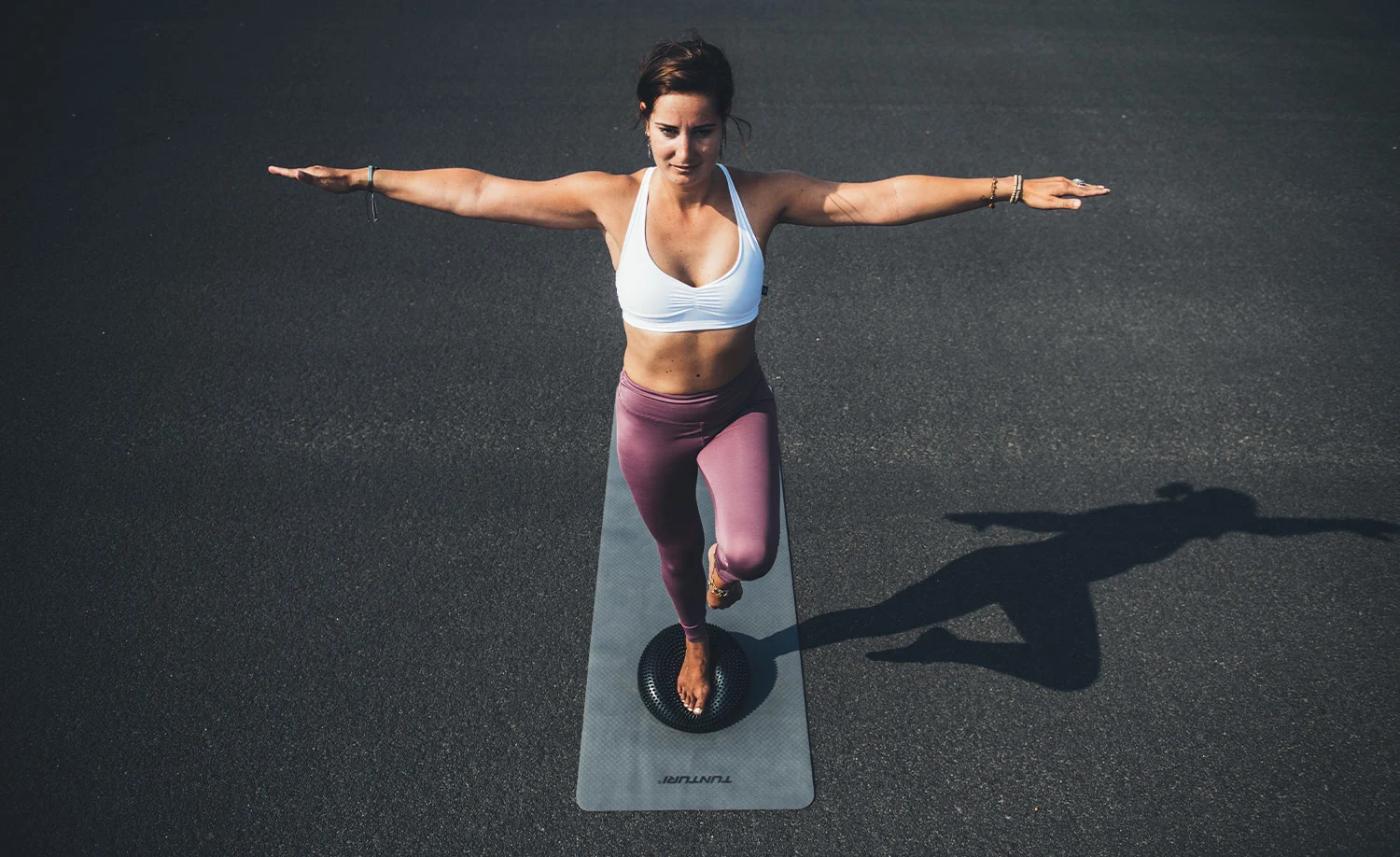
Balance training is often treated as an accessory to strength or conditioning programs, yet it plays a central role in athletic success. From explosive sprints to precise landings, balance underpins how efficiently an athlete moves, reacts, and stays injury-free. When balance is trained intentionally, performance gains show up across speed, power, coordination, and resilience.
Understanding Balance in Sports
Balance is the ability to control the body’s center of mass over its base of support. In sports, this control is rarely static. Athletes must stabilize while cutting, jumping, absorbing contact, or changing direction at high speed.
There are two key forms of balance athletes rely on:
-
Static balance: Maintaining stability while stationary, such as holding a single-leg stance.
-
Dynamic balance: Maintaining control during movement, like landing from a jump or pivoting to evade an opponent.
Most sports demand dynamic balance, making targeted training essential.
The Link Between Balance and Athletic Performance
Improved Movement Efficiency
Better balance allows athletes to move with less wasted motion. When the body is stable, force generated by the muscles transfers more effectively through the joints, resulting in cleaner, faster movements.
Enhanced Strength Expression
Strength is only useful if it can be controlled. Balance training improves the nervous system’s ability to coordinate muscle activation, allowing athletes to:
-
Apply force in unstable positions
-
Maintain posture under load
-
Stay powerful through uneven or unpredictable movement patterns
Faster Reaction and Coordination
Balance challenges stimulate proprioceptors—sensory receptors that help the body detect position and movement. Over time, this leads to:
-
Quicker adjustments to external forces
-
Sharper footwork
-
More precise body control during complex actions
Balance Training and Injury Prevention
One of the most valuable benefits of balance training is reduced injury risk. Many non-contact injuries occur when the body cannot stabilize quickly enough during sudden movements.
Balance training helps by:
-
Strengthening stabilizing muscles around joints
-
Improving joint awareness and alignment
-
Teaching the body to absorb force safely
This is particularly important for the ankles, knees, hips, and lower back—areas commonly stressed in athletic competition.
Performance Gains Across Different Sports
Balance training adapts to the demands of various disciplines:
-
Team sports: Improves cutting, tackling stability, and aerial control
-
Endurance sports: Enhances running economy and fatigue resistance
-
Combat sports: Increases striking power and defensive stability
-
Court sports: Sharpens lateral movement and landing mechanics
Regardless of the sport, better balance supports consistency and control under pressure.
Effective Balance Training Methods
Single-Limb Exercises
Training on one leg forces the body to stabilize naturally. Examples include:
-
Single-leg squats
-
Step-downs
-
Single-leg Romanian deadlifts
Unstable Surface Training
Using tools like balance pads or domes challenges neuromuscular control when used correctly and progressively.
Dynamic Balance Drills
Sport-specific movements reinforce real-world application:
-
Jump-and-stick landings
-
Lateral hops with controlled stops
-
Deceleration drills with directional changes
Core-Integrated Balance Work
A strong, responsive core is essential for balance. Rotational and anti-rotation exercises improve whole-body stability during movement.
How Often Athletes Should Train Balance
Balance training does not require long sessions to be effective. Short, focused work integrated into warm-ups or strength sessions delivers results.
Recommended frequency:
-
2–4 sessions per week
-
10–20 minutes per session
-
Progress from simple to complex movements
Consistency matters more than intensity when building balance capacity.
Why Balance Training Translates to Competitive Advantage
Athletes who invest in balance training gain an edge that often goes unnoticed until competition. They move more confidently, recover faster from mistakes, and maintain performance when fatigue sets in. Balance training enhances the connection between strength, speed, and control, turning physical ability into reliable performance.
Frequently Asked Questions
1. Is balance training only useful for beginners?
No. Advanced athletes benefit greatly because higher speeds and forces demand greater control and stability.
2. Can balance training replace strength training?
Balance training complements strength work but should not replace it. Both are most effective when combined.
3. How long does it take to see improvements from balance training?
Neuromuscular adaptations often appear within 2–4 weeks with consistent practice.
4. Does balance training help with agility?
Yes. Improved balance enhances body control during rapid direction changes, a key component of agility.
5. Is balance training safe during rehabilitation?
When guided appropriately, balance exercises are commonly used in rehab to restore joint stability and confidence.
6. Should balance training be sport-specific?
As athletes progress, balance drills should mirror the movement patterns and demands of their sport.
7. Can balance training improve mental focus?
Yes. Challenging balance tasks require concentration and body awareness, which can improve overall movement focus under pressure.
