

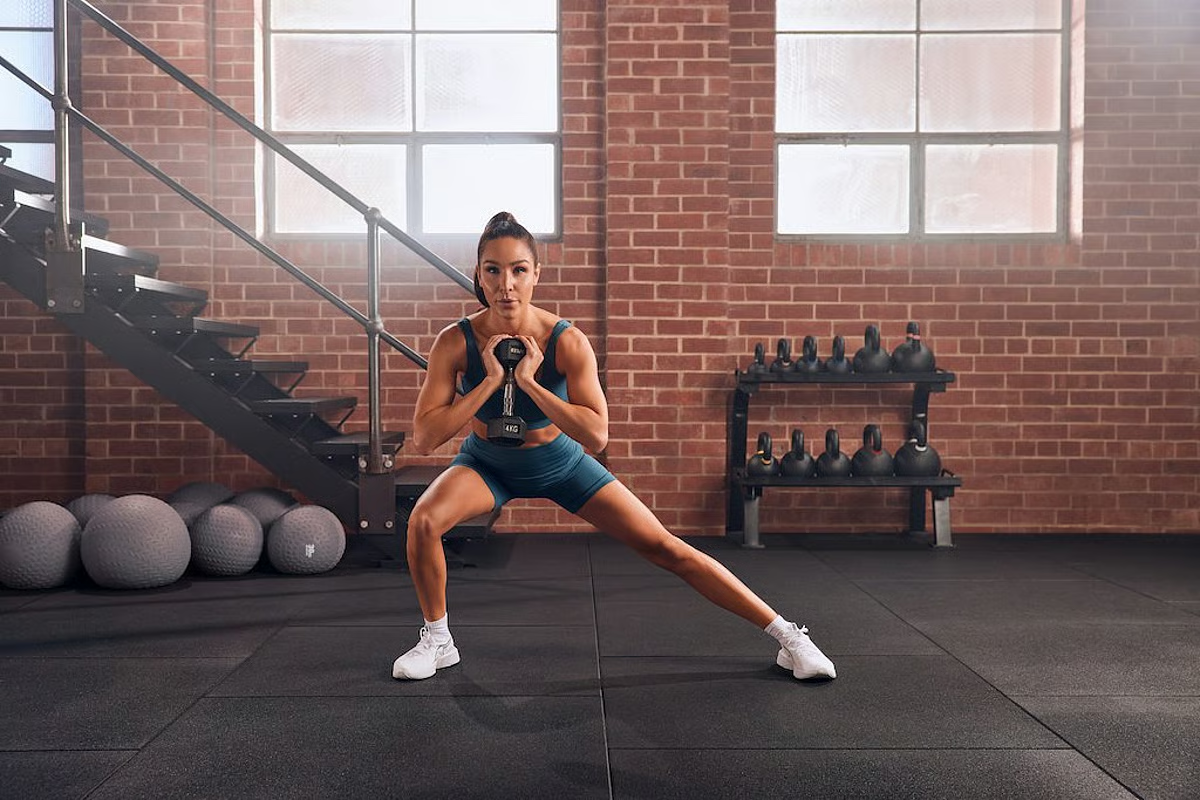
In a city that moves as quickly as Singapore, the ability to respond to daily demands with precision becomes a quiet advantage that many people overlook. High intensity interval training, commonly referred to as HIIT, is often praised for its physical transformation potential, but it also plays an important role in sharpening reflexes, movement timing, and adaptive responses. When people join a structured hiit training workout environment, they are training their bodies for far more than just strength or endurance. They are building urban reflex fitness, a form of physical readiness that aligns perfectly with the speed of modern city living.
Singaporeans spend their days moving between trains, escalators, office corridors, crowded walkways, and tightly scheduled activities. These micro moments require quick posture shifts, rapid decision making, sudden direction changes, and short bursts of acceleration. HIIT conditions the neuromuscular system to handle this type of lifestyle with greater ease. It teaches the body to move with intention, accuracy, and rhythm, even under fatigue.
How HIIT Trains the Body to React Faster
HIIT is based on rapid bursts of intense work followed by controlled recovery intervals. This repeated cycle trains the nervous system to activate muscles quickly and efficiently. The body becomes accustomed to switching movement patterns without hesitation. As a result, urban residents who practise HIIT often notice that daily tasks feel smoother.
Neuromuscular Speed Enhancement
The nervous system communicates with the muscles through electrical signals. During HIIT, these signals are sent repeatedly at high speed. The constant repetition encourages faster reaction cycles. This is why people who regularly perform HIIT often take less time to stabilise themselves when stepping off an escalator or adjusting their balance when someone bumps into them on the bus.
Improved Coordination and Balance
Each HIIT session challenges the body to shift its weight, manage quick accelerations, and maintain stability. Over time, this leads to better muscle synchronisation. The body begins to anticipate movement instead of reacting to it. This anticipation forms the foundation of urban reflex fitness.
Strengthening Micro Muscles
Micro muscles are small stabilising muscles that support the spine, hips, and ankles. Although they are not as visible as the major muscle groups, they play a vital role in reflex speed. HIIT strengthens these muscles through quick directional changes, jumps, and multi angle movements. The stronger these stabilisers become, the sharper your reflexes feel in everyday life.
Why Reflex Fitness Matters in Singapore
Singapore’s city design encourages walking, stair climbing, mixed mobility, and constant transitions between indoor and outdoor environments. Reflex fitness gives people better control over their bodies in these settings.
Navigating Crowded Spaces
In commuter heavy areas such as MRT stations, shopping districts, and business hubs, quick footwork reduces the likelihood of accidental collisions. HIIT improves agility, which translates into smoother movement through crowds.
Adapting to Surface Changes
Singapore’s pavements, tiled floors, escalators, and slopes require different types of foot placement. A trained body can adjust quickly to grip changes, elevation shifts, and moving platforms.
Handling Unexpected Obstacles
A child running across a pathway, a sudden push in a crowded lift, or a wet patch on the floor can catch anyone by surprise. HIIT reduces reaction delays, allowing quicker posture correction.
Urban Reflex Fitness for Office Workers
A surprising number of daily reflex demands occur in office settings. Although the environment seems controlled, quick response ability still matters.
Managing Long Sitting Hours
Intervals of intense movement during HIIT improve circulation and muscle sensitivity. This helps office workers reduce stiffness, especially after long meetings or extended computer work.
Faster Postural Correction
A strong neuromuscular system can detect slouching early and correct it automatically. This leads to better long term alignment and reduces discomfort during the workday.
Handling Micro Movements
Reaching for documents, turning toward a colleague, or shifting from sitting to standing are minor actions that become smoother with improved reflex timing.
Environmental Rhythm and HIIT
Singapore’s fast pace is paired with rapid changes in surroundings. One moment you are in a warm outdoor setting, and the next moment you step into a cool, air conditioned building. This environmental contrast requires quick physiological adjustments.
Temperature Adaptation
HIIT enhances heat tolerance and circulatory efficiency. This allows the body to adapt quickly during temperature shifts, reducing discomfort and fatigue.
Transition Smoothness
The ability to move quickly between different settings without losing energy is supported by the body’s improved cardiovascular response from HIIT.
How Urban Living Shapes the Way Singaporeans Experience HIIT
The city’s structure influences movement patterns. HIIT aligns naturally with these patterns.
Short Bursts of Urban Speed
Daily life in Singapore contains many mini intervals similar to HIIT bursts. Examples include:
• Jogging up stairs to catch the MRT
• Fast walking during rainy weather
• Carrying groceries while navigating crowds
• Moving between office floors
HIIT strengthens the muscles responsible for these quick power bursts.
Building Predictive Movement
Predictive movement refers to the body’s ability to prepare for an action before it happens. The more familiar the body becomes with HIIT’s quick transitions, the quicker it can predict similar transitions in real life.
Mental Processing and Reflex Training Through HIIT
HIIT sharpens physical reflexes, but it also improves cognitive speed.
Faster Decision Making
During high intensity intervals, the brain has to make quick adjustments to form, pace, and breathing. This encourages sharper thinking.
Better Spatial Awareness
HIIT often includes movement patterns that require awareness of surrounding space. This awareness improves navigation and posture control in urban environments.
Reacting Under Pressure
HIIT trains you to maintain form even when tired. This skill applies to daily moments such as rushing for public transport or managing back to back appointments.
Why Structured HIIT Classes Build Better Reflex Fitness
Self guided training helps, but structured classes designed by trained instructors create stronger reflex focused outcomes. One example is the environment at True Fitness Singapore, where the layout, coaching style, and movement sequencing create ideal conditions for reflex improvement.
Professional Rhythm Sequencing
Trainers design intervals that force the body to respond quickly and smoothly. This improves both timing and technique.
Controlled Fatigue Environment
Instructors ensure that participants reach the right level of intensity without risking form breakdown. This is important for reflex training because accuracy matters as much as intensity.
Multi Directional Drills
Structured classes frequently include lateral, diagonal, rotational, and explosive movements. These form the backbone of reflex development.
Applying Urban Reflex Fitness to Real World Moments
The improvements gained from HIIT show up in unexpected parts of daily life.
Quick Public Transport Transitions
Stepping onto a moving train or bus becomes less unstable.
Elevators and Escalators
The body adjusts instantly to the movement and angle of these systems.
Wet Weather Situations
Rain is common in Singapore. People with strong reflex fitness react more safely to slippery conditions.
Parenting and Lifting
Carrying children, bending quickly, or reacting when a toddler moves unpredictably becomes more manageable.
FAQ
Q1. Can HIIT improve reflexes even for someone who has never been athletic?
Yes. Reflexes improve through repetition and neuromuscular training, not athletic background. Anyone who consistently performs HIIT will notice better timing and balance, especially in daily tasks.
Q2. How long does it take to see improvements in reflex speed?
Most people begin noticing smoother movement within three to five weeks of consistent practice. The changes are subtle at first but become more obvious in crowded or fast paced environments.
Q3. Does reflex fitness reduce the chances of minor injuries in daily life?
Yes. Better reaction timing reduces slips, missteps, and awkward movements, especially on uneven surfaces or during sudden direction changes.
Q4. Can HIIT help with posture issues caused by long working hours?
HIIT activates the stabilising muscles that support the spine. This leads to faster postural corrections and less stiffness during long workdays.
Q5. Is reflex training suitable for people with busy schedules?
Yes. HIIT is ideal for busy individuals because it delivers movement efficiency improvements within short sessions. Even two to three sessions a week can enhance reflex readiness.
